
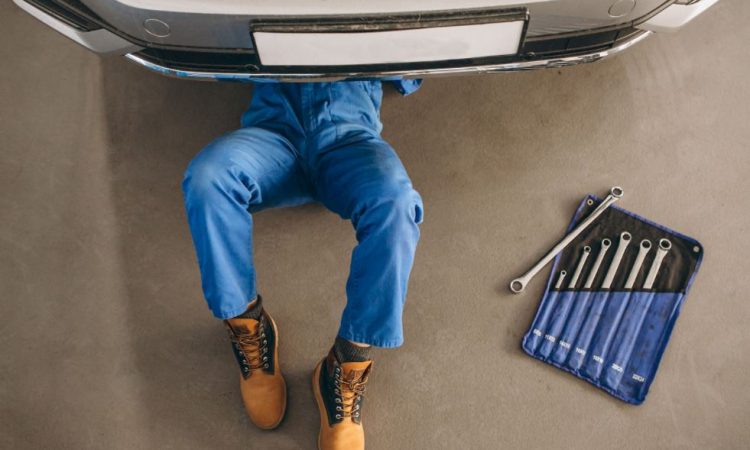
Some days teach you big lessons in small, greasy places—like your driveway, right when the light starts fading and your patience is already running low. You know that feeling: you’re trying to do a “quick” tire swap, your hands are cold, and every tool you touch seems to fight back. And then, out of nowhere, something *doesn’t* fight you. Something glides. Something rolls like it actually wants to help.
That’s the day you discover the quiet joy of a smooth-rolling jack.
Not the glamorous kind of joy. Not fireworks. More like relief in your chest, a loosened jaw, and the sudden thought: *Wait… this can be easier?* If you’ve ever wrestled with stubborn car jacks that scrape, wobble, or refuse to line up, you already know how emotional a simple upgrade can feel. This guide walks you through what makes a jack “smooth,” why it matters more than people admit, and how you can pick one that makes you feel capable instead of cursed.
Why a Smooth-Rolling Jack Changes Everything
A jack isn’t supposed to be dramatic. Yet somehow, the wrong one turns a basic task into a tense little showdown. When the wheels don’t roll cleanly, you end up doing awkward shoves and tiny repositioning dances. You’re crouched. You’re guessing. You’re trying not to pinch your fingers. And you’re thinking, *Why is this so hard?*
A smooth-rolling car jack does something subtle but powerful: it lets you focus on the job, not on fighting the tool.
Here’s what “smooth-rolling” really gives you:
– Precise positioning under the correct lift point, without endless scooting
– Better stability because the jack can move naturally as the car rises
– Less strain on you—your back, your wrists, your patience
– More confidence, especially if you’re new to this
This is why so many people fall in love with a good trolley-style unit. When car jacks roll like they’re on rails, the whole experience feels calmer.
And yes, calm matters. Safety depends on it.
The “Creative” Moment: When Problem-Solving Gets Personal
There’s a funny thing about the word *creative*: it often shows up when something has gone wrong.
Maybe you’ve been there—stuck without the right adapter, using a scrap of wood, improvising because you refuse to be stranded. One evening, you might find yourself being “creative” with an old, bent handle or a jack that won’t quite reach. Suddenly, you’re brainstorming like an engineer and praying like a poet.
That’s the thing: you shouldn’t need to be creative just to lift a vehicle safely.
A smooth-rolling jack reduces the need for those desperate little inventions. The goal is to use creativity on the fun parts of life—projects, upgrades, weekend plans—not on preventing your tool from turning into a hazard.
What to Look For in Car Jacks That Roll Smoothly
Not all jacks are built with the same care, and you can feel it in the first five seconds. If you want car jacks that behave like a dependable teammate, focus on these practical features.
1) Wheel quality and placement
The casters should be solid, wide enough to feel stable, and mounted cleanly. Cheap wheels tend to chatter or jam on small debris. Better wheels roll over cracks and texture instead of stopping dead.
2) Low-profile reach (even if you don’t drive low)
A jack that fits easily under your car reduces the awkward approach angle. Even standard sedans benefit, because you won’t waste time hunting for the perfect entry point.
3) Lift range that matches your vehicle
A good lift range means you won’t max out the jack just to get the tire off the ground. That extra margin feels reassuring—like having room to breathe.
4) Smooth hydraulic action
The rolling matters, but so does the lift. You want steady pumping, predictable rise, and controlled lowering. Jerky motion makes everything feel riskier than it needs to be.
5) Real-world weight capacity
Don’t shop only by “it technically lifts the car.” Look for comfortable overhead—because tools work best when they’re not operating at their limit.
Trolley Car Jack Basics: What Makes It Feel Effortless
A trolley car jack tends to win hearts because it’s designed to move. The long handle gives you leverage. The chassis stays planted. The wheels track with less drama. When you position it under a lift point, it usually *stays cooperative*.
But here’s the detail that often gets overlooked: when you lift a car, the geometry shifts slightly. The jack needs to roll a little to keep the lift pad aligned safely. If the wheels can’t roll, the jack may bind or tilt. That’s not just annoying—it’s a safety concern.
So when a trolley car jack rolls smoothly, it’s not just convenience. It’s the tool doing what it was designed to do.
The “Unravel” Moment: When Stress Starts to Slip Away
The word *unravel* usually sounds like trouble—threads pulling loose, plans collapsing, nerves fraying.
But sometimes *you* unravel in a good way.
Picture this: you’ve spent years bracing for the worst every time you lift a car. Your shoulders tense automatically. Your mind replays old memories of wobbly lifts and stuck wheels. Then you try a jack that glides into place with barely any effort. The handle pumps smoothly. The car rises without that sickening side-shift.
And you feel yourself unravel—slowly, quietly—like a knot finally loosening.
That’s not just mechanical. That’s emotional. Because you’re not merely lifting a vehicle. You’re lifting the weight of past frustration, too.
Safe Lifting: A Simple Step-by-Step Guide You Can Trust
Even the best jack isn’t a substitute for safe habits. If you want your next lift to feel steady and predictable, follow a routine you can repeat every time.
- Park on solid, level ground
Avoid soft asphalt on hot days, gravel, or sloped driveways when possible.
- Set the parking brake and secure the wheels
Use wheel chocks or sturdy blocks. You’re preventing movement before it starts.
- Find the correct lift point
Check your owner’s manual. You’re aiming for reinforced pinch welds or designated lift pads.
- Position the jack and test contact
Before lifting high, pump just enough to seat the pad firmly.
- Lift smoothly and watch alignment
Let the jack roll as needed. Don’t fight it; observe it.
- Place jack stands—always
Car jacks lift. Stands hold. That division of labor keeps you safer.
- Lower onto stands slowly. Controlled lowering prevents sudden shifts.
Featured Image : magnific.com

DigiTechnoPost is a top-rated technology and digital transformation blog where we cover the insightful article about the technology, blogging, WordPress, digital transformation, and digital marketing. We can assist you to digitize your business by providing the best digital transformation & marketing tips. You may follow us on Twitter and Facebook.